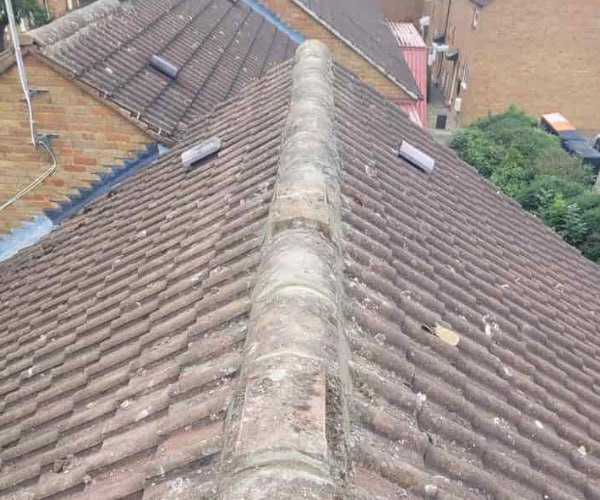
When Does a Pitched or Hipped Roof Need Re-Roofing Rather Than Further Repairs?
A pitched or hipped roof can often be kept weather-resistant through well-planned repairs. Replacing slipped tiles, renewing damaged flashing or repairing a localised section of underlay may be entirely appropriate when the rest of the roof remains sound.
However, repeated defects across several areas can indicate that isolated repairs are no longer addressing the roof’s overall condition. Knowing when to consider re-roofing requires a complete assessment of the covering, fixings, underlay, battens and supporting structure rather than a decision based on one visible problem.
How to Decide Between Roof Repairs and Re-Roofing
The extent, cause and distribution of the deterioration are more important than the appearance of one damaged section. A roof may look heavily weathered but remain repairable, while a neater-looking covering could conceal widespread failure beneath the tiles.
Repairs Are Often Suitable for Localised Damage
Further repairs may remain practical when the problem is limited to a clearly identifiable area and the surrounding materials are still performing correctly.
Examples can include:
- A small number of slipped or broken tiles
- Localised damage to lead flashing
- A minor defect around one roof junction
- Isolated storm-related damage
- A limited section of failed mortar
- A repairable underlay defect
- One traceable source of water ingress
In these circumstances, a targeted repair can restore the affected section without disturbing serviceable parts of the roof. The work should still address the cause of the damage rather than simply covering the visible symptom.
Widespread Tile Failure May Indicate a Larger Problem
Tiles can become brittle, porous or increasingly difficult to secure as they age. When damage appears across several roof slopes, replacing individual tiles may provide only temporary improvement.
Repeated slipping can also indicate that fixings or battens are deteriorating. On a hipped roof, faults may appear across multiple elevations because the covering includes more junctions, hip lines and changes in direction.
If serviceable replacement tiles are fitted among large areas of weakening material, further defects may continue to emerge nearby.
Failing Fixings Can Affect the Entire Covering
Roof tiles rely on nails, clips and battens to remain securely positioned. These components are largely hidden, but their condition is essential to the roof’s stability.
Where fixings have corroded or battens have deteriorated, tiles may begin slipping in different places. Refixing individual tiles does not resolve widespread weakness in the system beneath them.
Removing the covering during re-roofing allows the battens and underlay to be inspected and renewed where necessary, creating a dependable base for the replacement roof covering.
Deteriorated Underlay Reduces Secondary Protection
The underlay beneath the tiles provides an additional barrier against wind-driven rain and moisture. Over time, older material may become brittle, tear or sag between the rafters.
A small local defect may sometimes be repaired, but widespread underlay failure is difficult to address effectively without lifting a substantial area of tiles. If water is entering at several points, the condition of the underlay should form part of the decision between continued repairs and re-roofing.
Recurring Leaks Deserve a Whole-Roof Assessment
A leak that returns in the same place may indicate that the original cause was not fully identified. Leaks appearing in different areas can suggest broader deterioration involving tiles, junctions, flashing or underlay.
Water can travel along roof components before becoming visible indoors, so several damp patches do not always represent several separate entry points. Equally, one internal stain can be linked to damage across a larger section.
A whole-roof inspection helps establish whether a lasting repair is still possible or whether the covering has become unreliable as a complete system.
Structural Movement Changes the Decision
Sagging rooflines, uneven slopes or movement around hip and ridge lines require careful investigation. These signs may indicate problems involving rafters, supporting timbers or the roof deck rather than the external covering alone.
Re-roofing does not automatically correct structural defects. Any movement must be properly assessed so that the underlying issue can be addressed before a new covering is installed.
Where the structure remains stable, weathered external materials may still be repairable. Where instability is present, repeatedly replacing surface components is unlikely to provide a lasting solution.
Hipped Roofs Have Additional Vulnerable Junctions
A hipped roof slopes down on all sides and includes hip lines where adjoining roof planes meet. These junctions must remain secure and correctly weathered.
Deteriorated hip tiles, failed mortar or defects in modern dry-fix components can allow movement and water ingress. One damaged hip section may be repairable, but widespread deterioration along several junctions may indicate that broader work is required.
The complete geometry of the roof should be considered because water entering near a hip can travel beneath the covering before appearing elsewhere.
Repeated Patching Can Become Less Effective
A roof with numerous previous repairs may contain materials of different ages and conditions. Each patch can solve a specific problem, but it may not improve the performance of the surrounding covering.
Signs that further patching may offer limited benefit include:
- New leaks developing in unrelated areas
- Tiles repeatedly becoming loose
- Several roof slopes showing deterioration
- Extensive temporary repairs
- Widespread failure of mortar or fixings
- Large sections of underlay no longer performing
- Repairs becoming difficult without disturbing adjacent materials
At this stage, re-roofing may provide a more coherent solution by addressing the complete weatherproofing system.
What a Professional Roof Assessment Should Examine
A suitable assessment should check:
- The condition and security of the tiles
- Ridge and hip details
- Valleys, verges and roof junctions
- Lead flashing
- Underlay and battens
- Signs of moisture within the roof space
- The alignment of the roof slopes
- Previous repair areas
- The condition of accessible structural timbers
This evidence allows the recommendation to be based on the roof’s actual condition rather than its age alone.
Conclusion
A pitched or hipped roof generally needs re-roofing when deterioration is widespread, fixings and underlay are failing, leaks occur across different areas or repairs can no longer restore dependable performance. Localised defects may still be resolved successfully when the surrounding roof remains sound.
The right decision begins with a complete inspection. If you are concerned about an ageing or repeatedly leaking roof in Tickhill, South Yorkshire, GKL Roofing Tickhill can assess its condition and explain whether targeted repairs or re-roofing is the more appropriate course of action. Contact the team to arrange a professional roof assessment.
Call us on: 01302 490 497
Click here to find out more about GKL Roofing Tickhill
Click here to complete our contact form and see how we can help with your roofing needs.